 Featured partnerSign up to Lightyear and get up to €100 in a free fractional shareCapital at risk, terms apply. Seek guidance if necessary. Claim Up to €100 Capital at risk, terms apply. Seek guidance if necessary.
 - DCA means investing a fixed amount on a fixed schedule, regardless of market conditions, which turns investing from an emotional decision into a mechanical habit.
- You automatically buy more shares when prices are low and fewer when prices are high, smoothing out your average entry price over time.
- The real edge is psychological: automation keeps you invested through bull and bear markets instead of waiting on the sidelines for a perfect moment.
- Pair DCA with low-cost, diversified ETFs and a broker that supports automated recurring buys and fractional shares, then stay consistent for the long term.
Dollar-cost averaging (DCA) is one of the most powerful yet simple investment strategies available to European investors. By automatically investing a fixed amount at regular intervals, you remove the psychological barriers that keep many investors on the sidelines, waiting for the "perfect" moment that rarely comes.
The basicsWhat Is Dollar-Cost Averaging?
Dollar-cost averaging is an investment strategy where you invest a fixed amount of money at regular intervals, regardless of market conditions. Instead of trying to time the market with one large investment, you spread your purchases over time, buying more shares when prices are low and fewer when prices are high.
For European investors, this might mean investing €500 every month into an S&P 500 ETF or €125 weekly into a global index fund. The key is consistency: the investment happens automatically, whether markets are up 20% or down 15%.
The strategy works because it transforms investing from an emotional decision into a mechanical process. You're not sitting at your computer, watching red and green candles, trying to decide if today is the day to invest. The decision has already been made, and the investment happens automatically.
MechanicsHow Dollar-Cost Averaging Works
The mechanics of DCA are straightforward. You choose an investment amount, select your frequency (weekly, bi-weekly, or monthly), and set up automatic transfers. Your broker then executes these purchases on schedule, regardless of market conditions.
Consider this example: You decide to invest €500 monthly in a global equity ETF. In January, when the ETF trades at €100, your €500 buys 5 shares. In February, the market drops and the ETF falls to €80, so your €500 now buys 6.25 shares. In March, it recovers to €90, and you purchase 5.56 shares.
Over these three months, you've invested €1,500 and acquired 16.81 shares at an average price of €89.26, even though the simple average of the three prices would be €90. This is the mathematical advantage of DCA: you automatically buy more when prices are low.
BehaviorThe Psychological Benefits: Why DCA Beats Emotional Investing
The most significant benefit of dollar-cost averaging isn't mathematical; it's psychological. We've observed that the biggest destroyer of investment returns isn't market crashes or high fees, but human emotion.
- Removes emotion completely by investing on autopilot
- Buys at every price level, including the lows others avoid
- Keeps you participating in market growth instead of waiting on the sidelines
- Produces a better average price over a full market cycle
- Waits for "better prices" and misses early gains
- Makes fear-driven and FOMO-driven decisions
- Leaves cash uninvested while markets climb
- Ends up investing less overall through poor timing
Most investors know they should "buy low and sell high," yet studies consistently show that the average investor underperforms the market by significant margins. Why? Because they let emotions drive their decisions. They wait for the "perfect" entry point, keeping cash on the sidelines while markets climb higher. When markets finally correct, fear takes over, and they wait for things to "settle down" before investing.
DCA eliminates this emotional rollercoaster. Your investments happen automatically, removing the temptation to time the market. You invest through bull markets and bear markets, through uncertainty and optimism. Over time, this disciplined approach typically outperforms the returns of investors who try to time their entries and exits.
The strategy is particularly powerful during market volatility. While others are paralyzed by indecision, your automated investments continue accumulating shares. When markets eventually recover, you benefit from having purchased shares at various price points, including the lows that emotional investors missed.
The debateDollar-Cost Averaging vs Lump Sum Investing
The debate between DCA and lump sum investing often misses the practical reality most investors face. Yes, academic studies show that lump sum investing outperforms DCA about two-thirds of the time, but this assumes you have a large sum ready to invest and the emotional fortitude to deploy it all at once.
| Comparison factor | Dollar-cost averaging | Lump sum investing |
|---|---|---|
| Emotional impact | Advantage Removes emotion completely through automation | Requires courage to invest large amount at once |
| Market timing risk | Advantage Eliminates timing risk by spreading purchases | Full exposure to timing risk at entry point |
| Historical performance | Outperforms in volatile or declining markets | Advantage Wins ~66% of the time in rising markets |
| Time in market | Gradually increases market exposure | Advantage Immediate full market exposure |
| Cash management | Advantage Works with regular income flow | Requires large cash sum available upfront |
| Flexibility | Advantage Easy to adjust or pause if needed | One-time decision, less flexible |
| Psychological comfort | Advantage Less regret if markets decline initially | Can cause significant stress if markets drop |
| Best for | Regular income earners, risk-averse investors, beginners | Windfall recipients, experienced investors, long horizons |
For most European investors, the choice isn't between investing €50,000 today versus spreading it over 12 months. The real choice is between starting a systematic investment plan today or waiting for the "right time" to invest. We've seen countless investors wait months or even years for a market correction, missing substantial gains in the process.
If you receive a large windfall, such as an inheritance or bonus, you might consider a hybrid approach: invest half immediately and dollar-cost average the remainder over 6-12 months. This balances the statistical advantage of lump sum investing with the psychological comfort of DCA.
The frequency of your investments matters too. If your broker charges no commissions, we recommend weekly investments for better price averaging. However, if you're paying €5-10 per trade, monthly investments make more sense to minimize the impact of fees on your returns.
Build itSetting Up Your DCA Strategy
Creating an effective dollar-cost averaging strategy requires balancing several factors: investment frequency, broker fees, and your cash flow patterns.
For commission-free brokers, weekly investments provide the smoothest price averaging. You're buying 52 times per year instead of 12, which means better diversification across different market conditions. However, this only works with brokers that offer truly free trades.
If your broker charges per transaction, monthly investing strikes the best balance. The commission impact stays reasonable (typically under 2% for investments above €500), while still providing regular market exposure. Some investors align their DCA schedule with their salary payments, investing immediately after each paycheck to avoid the temptation of spending the money elsewhere.
Your investment amount should be sustainable through different life circumstances. It's better to invest €200 monthly for 10 years than to start with €500 and stop after six months because the amount was too aggressive. Remember, the power of DCA comes from consistency over time.
What to buyChoosing the Right Assets for DCA
Dollar-cost averaging works best with broadly diversified investments that you plan to hold long-term. For European investors, this typically means index ETFs tracking major markets like the S&P 500, FTSE All-World, or MSCI World indices.
When selecting ETFs for your DCA strategy, accumulating ETFs offer a significant advantage over distributing ones. With accumulating ETFs, dividends are automatically reinvested within the fund, compounding your returns without any action required from you. This is particularly valuable for DCA investors since you don't need to remember to reinvest quarterly dividends or worry about having enough cash to buy whole shares.
We recommend checking our guide on how to invest in the S&P 500 as a European investor for guidance on buying S&P 500 ETF's.
Use our compound interest calculator to project how your regular investments could grow over time. Even modest monthly investments can grow to substantial sums over 20-30 years when you factor in compound returns.
PlatformsBest Brokers for Automated DCA
Not all brokers offer equal support for dollar-cost averaging strategies. We've tested the major platforms available to EU investors and identified the ones that excel at automated investing.
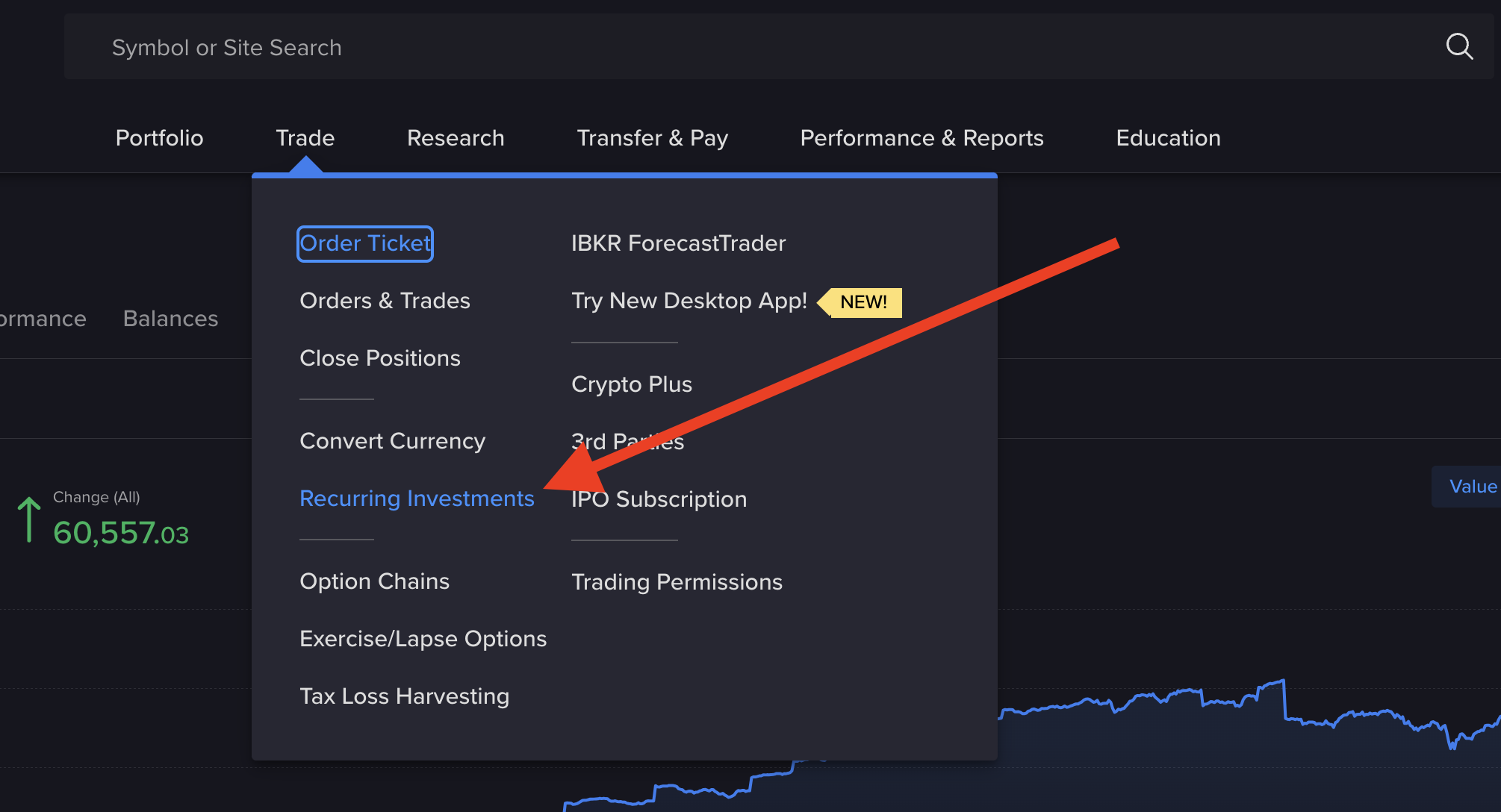
Interactive Brokers offers one of the most sophisticated recurring investment features we've reviewed. You can set up complex schedules, choose from thousands of ETFs, and enjoy some of the lowest fees in the industry. Their fractional share capability means every euro gets invested, with no cash left idle. Read our complete Interactive Brokers review to understand their full platform.
Lightyear has built their entire platform around making regular investing simple. Their automated investment plans are incredibly user-friendly, perfect for beginners who want to start DCA without complexity. They offer commission-free investing in many popular ETFs, making them ideal for smaller, frequent investments. Lightyear also currently offers an attractive sign-up bonus.
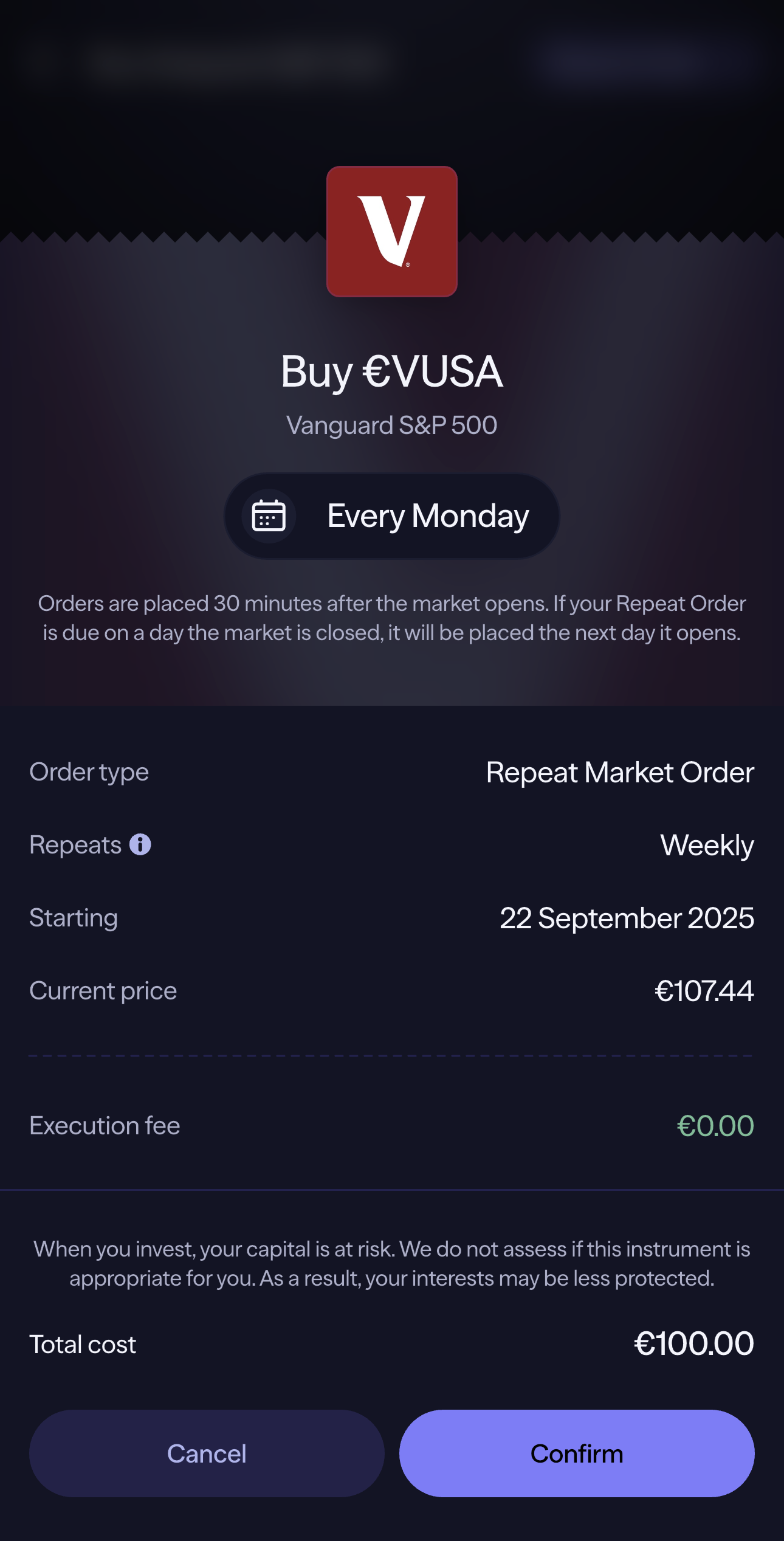
eToro recently also introduced recurring investments. They even waive their stock commissions if you buy stocks on their platform that way. Check our detailed eToro review for more information.
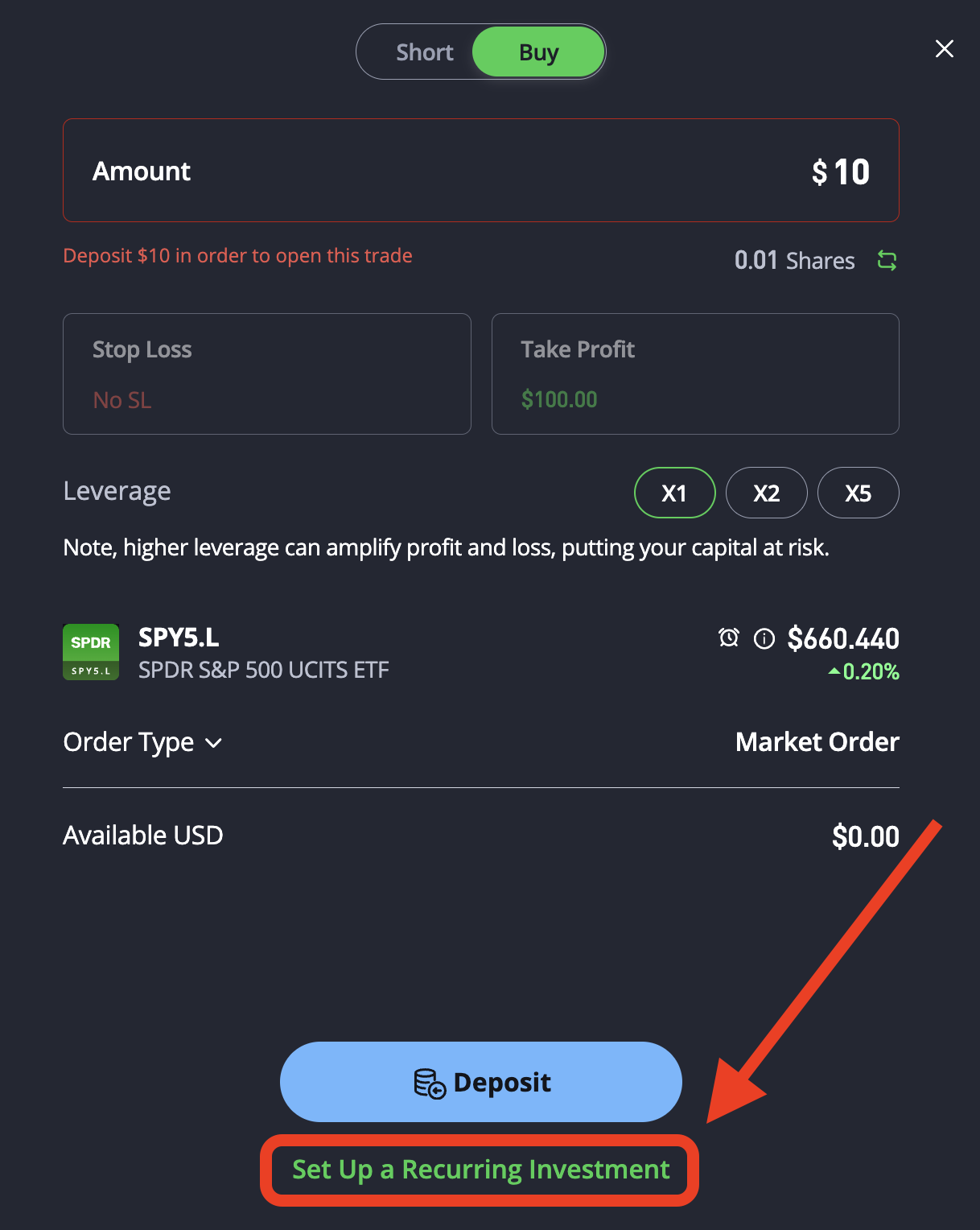
Freedom24
Freedom24 supports automatic recurring investments through its ETF Investment Plan, which covers selected ETFs. When setting up a plan, the user chooses the instrument, the investment amount or number of shares, the currency, the frequency and the payment card. Purchases run either once a week or once a month. Weekly purchases are initiated on the first trading day of the week and monthly purchases on the first trading day of the month, and it is not possible to select a specific purchase date.
The plan does not support fractional quantities. If the selected amount is insufficient for one whole unit, the purchase is not executed and any unused balance remains in the trading account. Orders are executed over the counter, with the execution price based on the previous trading day's closing price. Plans can be cancelled but not paused, so changing one means cancelling it and creating a new plan. This is an investment service rather than a savings or capital-protected product. 0% commission offer is available only for the Freedom24 Recurring Investment function. Other fees apply according to the Freedom24 Fee Schedule.
When choosing a broker for DCA, prioritize those offering fractional shares, low or no commissions on your target ETFs, and reliable automated investment features. The best platform is one that makes your strategy so easy to maintain that you never think about stopping it. Newer options such as Mintos, which offers investment plans for every stock, also fit this approach.
UpkeepManaging Your DCA Portfolio
Once your dollar-cost averaging strategy is running, the temptation is to constantly check your portfolio performance. Resist this urge. The whole point of DCA is to remove emotion from investing, and frequent portfolio checking reintroduces the psychological pressures you're trying to avoid.
We recommend reviewing your portfolio quarterly, focusing on whether your strategy still aligns with your goals rather than short-term performance. Are you still comfortable with your monthly investment amount? Has your risk tolerance changed? Do your asset allocations still make sense?
Rebalancing becomes less critical with DCA since you're constantly adding new money to your portfolio. If one asset class has underperformed, your regular purchases automatically buy more of it, providing a natural rebalancing effect. However, annual rebalancing can still improve returns, especially if you're investing in multiple asset classes.
Use our ETF fee calculator to ensure your chosen funds remain cost-effective as your portfolio grows. Even small differences in expense ratios compound significantly over decades.
PitfallsCommon DCA Mistakes to Avoid
The biggest mistake we see is stopping DCA during market downturns. This is precisely when the strategy provides the most value, allowing you to accumulate shares at lower prices. If anything, market corrections are opportunities to increase your regular investment amount if your finances allow.
Another error is choosing an unsustainably high investment amount. Enthusiasm might drive you to commit €1,000 monthly, but if this stretches your budget, you'll likely stop within a few months. Start with an amount you can maintain even if you lose your job or face unexpected expenses. You can always increase it later.
Some investors try to "enhance" their DCA by varying their investment amounts based on market conditions. This defeats the purpose. The moment you start making decisions about how much to invest based on market levels, you've reintroduced the emotional component DCA is designed to eliminate.
Finally, don't neglect your emergency fund while pursuing DCA. Check our emergency fund guide for EU investors to ensure you have adequate cash reserves before committing to regular investments. Your DCA strategy should complement, not replace, basic financial security.
Bottom lineThe Long-Term Power of Consistent Investing
Dollar-cost averaging might not be the most exciting investment strategy, but it's one of the most effective for building long-term wealth. By removing emotion from the investment process and ensuring consistent market participation, DCA helps ordinary investors achieve extraordinary results over time.
The strategy is particularly powerful for European investors dealing with currency fluctuations when investing in global markets. Regular purchases smooth out both market volatility and currency movements, reducing the impact of poorly timed exchanges.
Most importantly, DCA ensures you actually invest. While others debate whether markets are too high or wait for the next correction, you're steadily building wealth. In investing, time in the market beats timing the market, and dollar-cost averaging guarantees you get that time.
Start your DCA journey today with one of the automated investing platforms we've reviewed. Choose an amount you can maintain, select a globally diversified ETF, and let time and consistency work their magic. Your future self will thank you for starting now rather than waiting for the perfect moment that never comes.
FAQFrequently Asked Questions
You can start DCA with as little as €10 per month with brokers offering fractional shares. However, if your broker charges commissions, we recommend monthly DCA instead of weekly to reduce the impact of commissions. The key is choosing an amount you can sustain long-term rather than starting high and stopping.
Weekly DCA provides better price averaging since you're buying 52 times per year instead of 12. However, this only makes sense with commission-free brokers. If you're paying €5-10 per transaction, monthly investing is more cost-effective. We've found that consistency matters more than frequency for long-term results.
No, continuing DCA during market highs is crucial to the strategy's success. Markets reach new all-time highs regularly throughout history, and stopping your investments means missing future gains. Remember, you're investing for years or decades, not months. Today's all-time high often looks cheap in retrospect.
While DCA works with individual stocks, we recommend focusing on diversified ETFs for systematic investing. Individual stocks carry company-specific risks that can permanently impair your capital. ETFs provide instant diversification and are ideal for long-term DCA strategies. Save stock picking for a smaller, separate portion of your portfolio.
If you have a large sum ready to invest and won't need it for 10+ years, statistical evidence favors lump sum investing. However, if you're building wealth from regular income or feel anxious about investing everything at once, DCA is the better choice. Most Europeans benefit more from starting DCA immediately rather than waiting to accumulate a lump sum.
Recessions are when DCA shines brightest. Your fixed investment amount buys significantly more shares when prices are depressed. We analyzed the 2008 financial crisis and found that investors who continued their DCA strategy throughout the downturn saw exceptional returns during the subsequent recovery. The key is maintaining your discipline when others panic.
Yes, consider increasing your DCA amount annually to match inflation and salary increases. If you start with €500 monthly, increasing it by 2-3% yearly maintains your purchasing power and accelerates wealth building. Many successful investors increase their DCA amount whenever they receive raises, dedicating a portion of new income to investments.